
As an Amazon Influencer, we earn from qualifying purchases you might make if you click any of the links or buttons on this page.
Ryzen 7 9800X3D vs 9850X3D: Which One Should You Buy?
The Ryzen 7 9850X3D is the faster processor, but it is not a new architecture or a larger CPU. It is essentially a higher-clocked version of the 9800X3D—and independent testing puts the real gaming advantage at roughly 0–4%.
The short answer
Buy the Ryzen 7 9800X3D for most gaming PCs. It provides nearly all the performance of the 9850X3D while running cooler and using less power under heavy CPU loads.
Buy the Ryzen 7 9850X3D when its price is no more than about $30 higher, you are assembling a no-compromise high-refresh gaming system, and you want the fastest of the two without manually overclocking.
Do not upgrade from a 9800X3D to a 9850X3D. The improvement is far too small to justify replacing an already excellent gaming CPU.
Quick picks
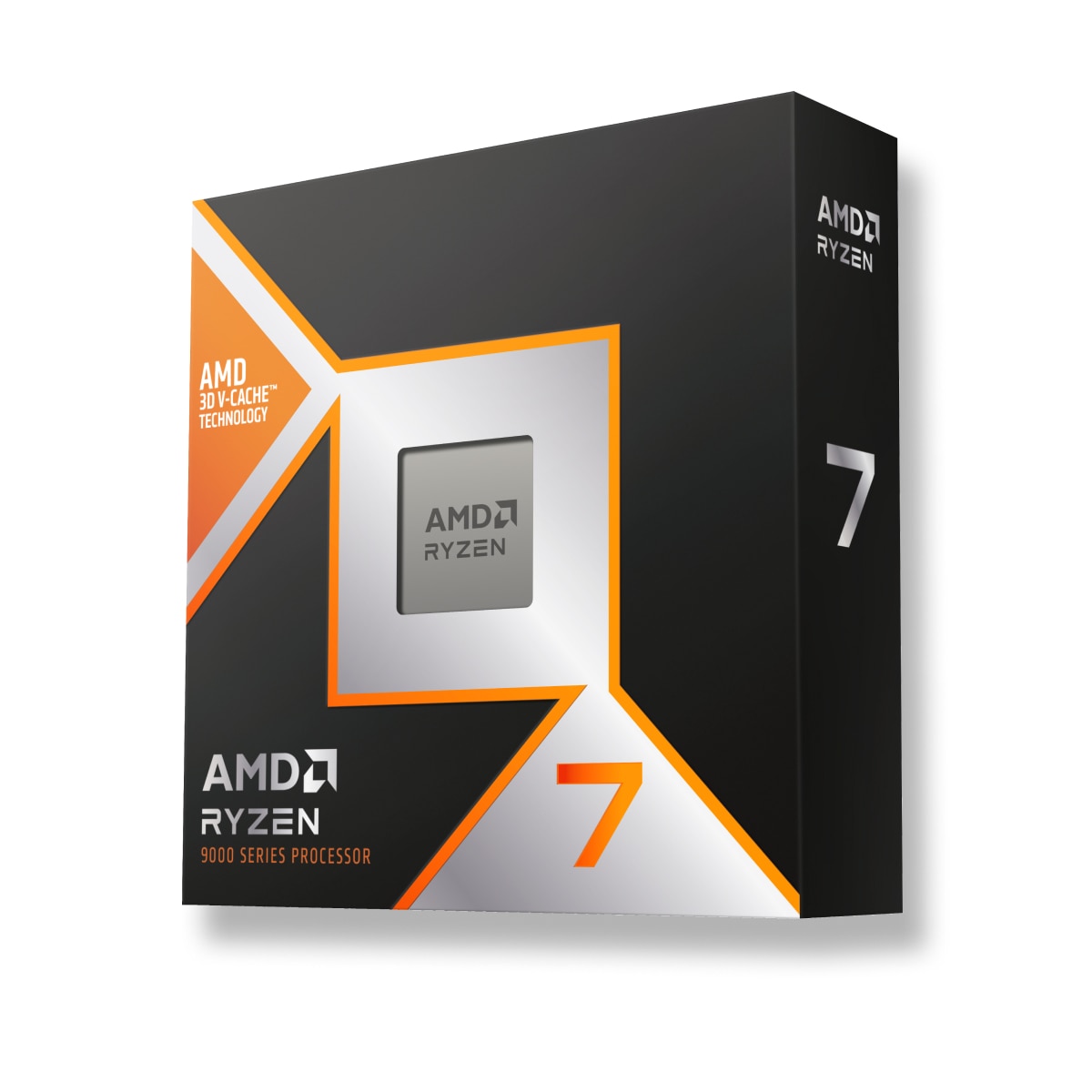
AMD Ryzen 7 9800X3D
Choose it when the 9850X3D costs more than roughly $30 extra, or when quiet cooling and efficiency matter.
Amazon affiliate link
AMD Ryzen 7 9850X3D
Choose it for a top-end high-refresh build when the premium is small and every last CPU-limited frame matters.
Amazon affiliate linkSpecifications compared
| Specification | Ryzen 7 9800X3D | Ryzen 7 9850X3D |
|---|---|---|
| Architecture | Zen 5 | Zen 5 |
| Cores / threads | 8 / 16 | 8 / 16 |
| Base clock | 4.7GHz | 4.7GHz |
| Maximum boost | Up to 5.2GHz | Up to 5.6GHz |
| L3 cache | 96MB | 96MB |
| Default TDP | 120W | 120W |
| Socket | AM5 | AM5 |
| Memory | DDR5, up to DDR5-5600 official | DDR5, up to DDR5-5600 official |
| PCIe | PCIe 5.0, 24 usable lanes | PCIe 5.0, 24 usable lanes |
| Overclocking | Unlocked, PBO, Curve Optimizer | Unlocked, PBO, Curve Optimizer |
| Launch MSRP | $479 | $499 |
What actually changed?
Only the advertised maximum boost clock changes in the headline specifications: 5.2GHz becomes 5.6GHz. Core count, architecture, cache, base clock, socket, memory support and nominal TDP remain the same.
Gaming performance: usually 0–4% faster
GamersNexus found the 9850X3D anywhere from effectively tied with the 9800X3D to about 4% faster. That spread matters more than a single average because it shows what the higher clock can—and cannot—do.
| Test | Observed 9850X3D advantage | What it means |
|---|---|---|
| Baldur’s Gate 3 | Effectively 0% | Both were around 165 FPS; higher boost did not create a useful lead. |
| Starfield | Within run-to-run variance | No meaningful visible difference. |
| Cyberpunk 2077, 1080p Medium | About 1.5% | A benchmark win, not a buying-decision difference. |
| Final Fantasy XIV | About 2.3% | Small gain in a very high-frame-rate test. |
| The Outer Worlds 2 | About 3.3% | One of the clearer frequency-sensitive gains. |
| F1 25 | About 3.3% | Useful mainly for buyers chasing extremely high frame rates. |
| Dragon’s Dogma 2 | About 3.7% | Measurable, but still modest. |
| Kingdom Come: Deliverance II, 1080p | About 4% | One of the best results for the 9850X3D. |
| Kingdom Come: Deliverance II, 1440p | Within variance | The RTX 5090 began becoming the limit, shrinking the CPU gap. |
The pattern is straightforward: the 9850X3D looks best when a game is strongly CPU- and frequency-limited. Raise resolution or image quality until the graphics card becomes the limit and the difference can largely disappear.
The practical gaming verdict
At normal 1440p and 4K settings, spend a meaningful price difference on the GPU, monitor, storage or cooling instead. The 9850X3D makes the most sense in an RTX 5090-class, low-resolution benchmark scenario or a real competitive setup targeting several hundred frames per second.
Productivity performance is not a reason to upgrade
Both processors have eight cores and sixteen threads, so the 9850X3D does not gain the additional throughput of a 12- or 16-core CPU. In GamersNexus testing it led by roughly 3–3.4% in 7-Zip, but effectively tied the 9800X3D in Blender and Photoshop.
If rendering, compiling or another heavily threaded workload is central to the PC, compare a higher-core Ryzen 9 instead. The 9850X3D is a faster gaming-focused eight-core chip, not a meaningful workstation upgrade.
Power and temperatures: the hidden cost of 5.6GHz
164W vs 143W
GamersNexus measured about 164W through EPS12V for the 9850X3D and 143W for the 9800X3D in the same all-core workload—roughly 20W more.
About 83°C vs 74–75°C
With the same 360mm Arctic Liquid Freezer II, the 9850X3D ran 7–9°C warmer in that test.
The identical 120W label should therefore not be read as identical real-world heat or power. The 9850X3D needs higher voltage to sustain its higher clocks, particularly in lightly threaded work.
Do you need a different cooler?
A large dual-tower air cooler remains reasonable for a gaming-focused build. But if you plan sustained all-core workloads, a strong 360mm AIO gives the hotter 9850X3D more thermal headroom.
Do not spend $50 more on the CPU and another $50–$100 on cooling merely to obtain a few percent in CPU-limited tests. Judge the complete platform cost.
Use this price-gap rule
| Current 9850X3D premium | Recommendation |
|---|---|
| $0–$20 | Buy the 9850X3D, assuming your cooler is appropriate. |
| About $20–$30 | Choose the 9850X3D for a no-compromise high-refresh build; choose the 9800X3D for efficiency and value. |
| About $30–$50 | Buy the 9800X3D for most systems. The performance difference rarely justifies the full premium. |
| More than $50 | Buy the 9800X3D. Put the difference toward hardware that changes the experience more. |
This rule uses the price difference between the processors—not either chip’s launch MSRP. Check current prices on the same day because retailer pricing can reverse the value result.
Ryzen 7 9800X3D
Amazon affiliate linkRyzen 7 9850X3D
Amazon affiliate linkWhich CPU should you buy?
- you want the better value;
- the 9850X3D costs more than about $30 extra;
- you play mainly at 1440p or 4K;
- you prefer lower heat and power;
- or the saving helps you buy a faster GPU.
- the premium is small;
- you want the fastest stock gaming CPU of the two;
- you play CPU-limited competitive titles at very high refresh rates;
- you already have a strong cooler;
- and you accept paying more for a small final performance gain.
Should 9800X3D owners upgrade?
No. You would replace an eight-core Zen 5 CPU with another eight-core Zen 5 CPU that has the same cache, platform and base clock. A 0–4% gaming uplift is not a meaningful generational upgrade.
Keep the 9800X3D and wait for a processor that changes performance materially, or upgrade the GPU if the system is currently GPU-limited.
Motherboard and BIOS compatibility
Both processors use AM5 and support AMD 600- and 800-series chipsets. They can use the same DDR5 memory, motherboard and cooler mounting system. The important difference is BIOS timing: a board manufactured before the 9850X3D launched may require an update before it can boot with that CPU.
When buying an older-stock motherboard, prefer a model with BIOS Flashback so firmware can be updated without needing an already-supported processor.
CPU Upgrade Calculator
Use the this tool to judge whether the CPU change is likely to matter for your GPU, resolution and workload.
Check the CPU upgrade →CPU Cooler Compatibility Calculator
Check cooler class, case height and RAM clearance before choosing the hotter 9850X3D.
Check cooler compatibility →Motherboard Compatibility Tool
Verify AM5, DDR5, case size and the exact motherboard model before ordering.
Check motherboard compatibility →PC Bottleneck & Balance Calculator
Check whether your actual GPU and resolution are likely to reveal the small CPU difference.
Check CPU and GPU balance →RAM, motherboard and cooler recommendations
- Memory: start with a matched 32GB (2×16GB) DDR5-6000 CL30 EXPO kit for gaming. Use 64GB only when your workloads need it.
- Motherboard: a good B650 or B850 board is enough. X870 does not make either CPU faster; buy it for connectivity such as USB4.
- Cooling: use a strong dual-tower air cooler for a gaming-first build. Consider a quality 360mm AIO for frequent sustained all-core work, especially with the 9850X3D.
- Power supply: size the PSU around the graphics card and complete system, not the CPU name alone.
Final verdict
The Ryzen 7 9800X3D remains the better recommendation for most buyers. It is usually extremely close in gaming, ties the newer chip in some titles and is easier to cool under sustained load.
The Ryzen 7 9850X3D is the premium choice, not the automatic choice. Buy it when the current price gap is small and you genuinely care about the final few percent of CPU-limited performance.
If you already own a 9800X3D, keep it.
Related Ryzen 9000X3D guides
- Best motherboards for Ryzen 7 9800X3D
- Best CPU coolers for Ryzen 7 9800X3D
- Best motherboards for Ryzen 7 9850X3D
- Best CPU coolers for Ryzen 7 9850X3D
- Complete Ryzen 7 9850X3D build
Ryzen 7 9800X3D vs 9850X3D FAQ
How much faster is the Ryzen 7 9850X3D?
Independent testing found it roughly 0–4% faster than the 9800X3D in games, depending on how frequency-sensitive and CPU-limited the test was.
Is the 9850X3D worth $50 more?
Usually no. At a $50 premium, the 9800X3D is the better value for most gaming PCs. The 9850X3D becomes easier to justify when the gap falls to around $20–$30.
Is the 9850X3D a new architecture?
No. Both are eight-core Zen 5 processors with 96MB of L3 cache. The main specification change is the maximum boost clock, which rises from 5.2 to 5.6GHz.
Does the 9850X3D run hotter?
Yes under the controlled all-core test cited here. It ran about 7–9°C warmer than the 9800X3D with the same 360mm cooler.
Do both CPUs use the same motherboard?
Yes. Both use socket AM5 and DDR5, although the 9850X3D may require a newer BIOS on boards produced before its release.
Should I upgrade from a 9800X3D?
No. The small performance difference does not justify replacing a 9800X3D.
Which CPU is better for 4K gaming?
Both are excellent. At 4K the graphics card is more likely to become the limit, so the cheaper 9800X3D is usually the smarter purchase.
Which CPU is better for competitive gaming?
The 9850X3D is technically better when chasing the highest possible CPU-limited frame rates, but the real gain is usually only a few percent.
Specification and testing references

- Best Micro ATX AM5 Motherboards in 2026 - August 27, 2026
- Ryzen 7 9800X3D vs 9850X3D: Which Should You Buy? - August 27, 2026
- Best Ryzen 7 9850X3D PC Build in 2026 - August 27, 2026